
Newsletter Subscribe
Enter your email address below and subscribe to our newsletter

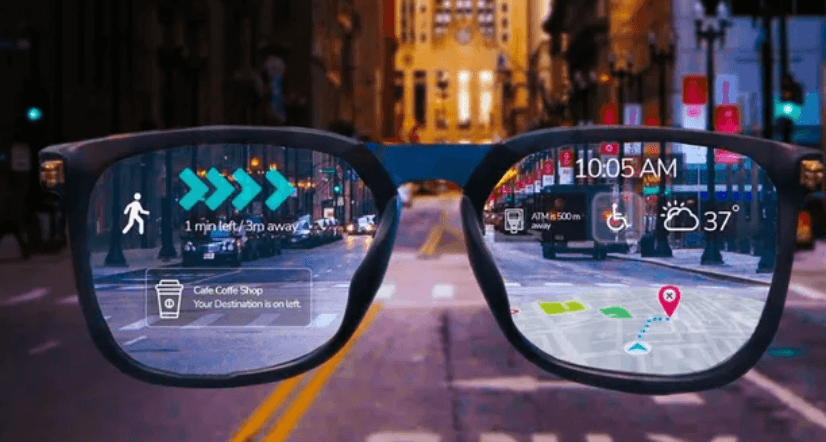
Smart glasses are wearable devices that combine traditional eyewear with advanced digital technology. They can display information, capture photos and videos, provide navigation, support voice commands, and connect to smartphones or other smart devices. Some models also include augmented reality (AR) features, allowing digital information to appear alongside the real world.
As wearable technology continues to evolve, smart glasses are becoming useful for communication, entertainment, education, healthcare, business, and industrial applications. This guide explains what smart glasses are, how they work, their features, benefits, types, applications, challenges, and future potential.
Smart glasses are wearable electronic devices designed in the form of eyeglasses. They integrate components such as displays, cameras, microphones, speakers, sensors, and wireless connectivity to provide digital features while allowing users to see their surroundings.
Depending on the model, smart glasses may focus on notifications, media playback, fitness tracking, or augmented reality experiences.
Some smart glasses project digital information onto transparent lenses or small display panels.
Integrated sensors detect movement, orientation, light, and user interactions.
Many smart glasses include cameras for taking photos, recording videos, or supporting visual recognition features.
Bluetooth and Wi-Fi connections allow the glasses to communicate with smartphones and other devices.
Built-in microphones enable users to control features using voice assistants or voice commands.
Rechargeable batteries provide power for displays, cameras, processors, and wireless communication.
Displays notifications, directions, or other digital information within the user’s field of view.
Allows hands-free operation through voice commands.
Supports photo capture, video recording, and video communication.
Built-in speakers or audio systems provide music, calls, and voice assistant responses.
Synchronizes notifications, contacts, messages, and applications with compatible mobile devices.
Some smart glasses overlay digital content onto real-world environments.
Display digital information while allowing users to view the real world.
Focus on hands-free calling, music playback, and voice assistant functionality.
Designed primarily for capturing photos and videos from the wearer’s perspective.
Used in manufacturing, maintenance, logistics, and field services for hands-free access to information.
Support healthcare professionals with patient information, remote assistance, and visualization tools.
Enhance learning through interactive and immersive educational experiences.
Users can access information without holding a smartphone or tablet.
Quick access to instructions, notifications, and communication supports efficient workflows.
Real-time directions help users travel more conveniently.
Voice calls, messaging, and video communication can be performed hands-free.
Augmented reality features enhance training and educational experiences.
Display directions while walking, cycling, or driving.
Assist medical professionals during diagnosis, surgery, training, and remote consultations.
Provide workers with instructions, maintenance information, and remote support.
Create interactive lessons and immersive learning experiences.
Help employees manage inventory and assist customers more efficiently.
Support gaming, media viewing, photography, and video recording.
Enable experts to provide real-time guidance to workers in different locations.
Assist individuals with visual or hearing impairments through specialized features.
Advanced features may reduce operating time between charges.
Built-in cameras and recording capabilities raise questions about personal privacy.
Some smart glasses can be expensive due to advanced hardware and display technologies.
Extended use may depend on the weight, fit, and overall design of the device.
Choose glasses based on whether you need audio, augmented reality, navigation, or productivity features.
Ensure the device works with your smartphone and operating system.
Select a model with battery life that matches your daily usage.
For augmented reality models, consider display clarity and visibility.
Choose lightweight glasses that fit comfortably for long periods.
Select products that offer software updates, customer support, and reliable build quality.
Access digital information quickly without constantly checking a phone.
Support efficient workflows in professional and industrial environments.
Combine wearable technology with intuitive hands-free interaction.
Smart glasses continue to find new uses across healthcare, education, business, and entertainment.
Smart glasses are wearable devices that combine traditional eyewear with digital technologies such as displays, cameras, sensors, wireless connectivity, and voice control.
Depending on the model, smart glasses can display notifications, provide navigation, capture photos and videos, support voice commands, play audio, and offer augmented reality experiences.
Many smart glasses work with smartphones for notifications, calls, applications, and internet connectivity, while some models can perform certain functions independently.
Yes. Many smart glasses are designed for daily activities such as communication, navigation, entertainment, fitness, and productivity, while others are intended for professional or industrial use.
Smart glasses provide digital features such as audio, notifications, and connectivity, while augmented reality glasses specifically display digital information that interacts with the user’s view of the real world.
Smart glasses represent an exciting advancement in wearable technology by combining digital features with everyday eyewear. From hands-free communication and navigation to augmented reality, healthcare, education, and industrial applications, smart glasses continue to expand the possibilities of connected technology. As hardware becomes lighter, batteries improve, and software evolves, smart glasses are expected to play an increasingly important role in both personal and professional environments, offering more convenient, immersive, and intelligent ways to interact with the digital world.

